By Stephanie Johnson
Published January 7, 2026
San Francisco’s housing market in 2025 was defined by sharp contrasts—strong spring momentum, a noticeable summer correction, and a competitive but uneven finish to the year. While pricing volatility was more pronounced than in surrounding markets, limited inventory and sustained buyer demand continued to support high home values. By the fourth quarter, the market showed renewed stability and an increase in buyer competition for homes that were well priced and beautifully presented.
This was a year where timing, preparation, and pricing strategy mattered more than ever.
What Happened in 2025: The Big Picture
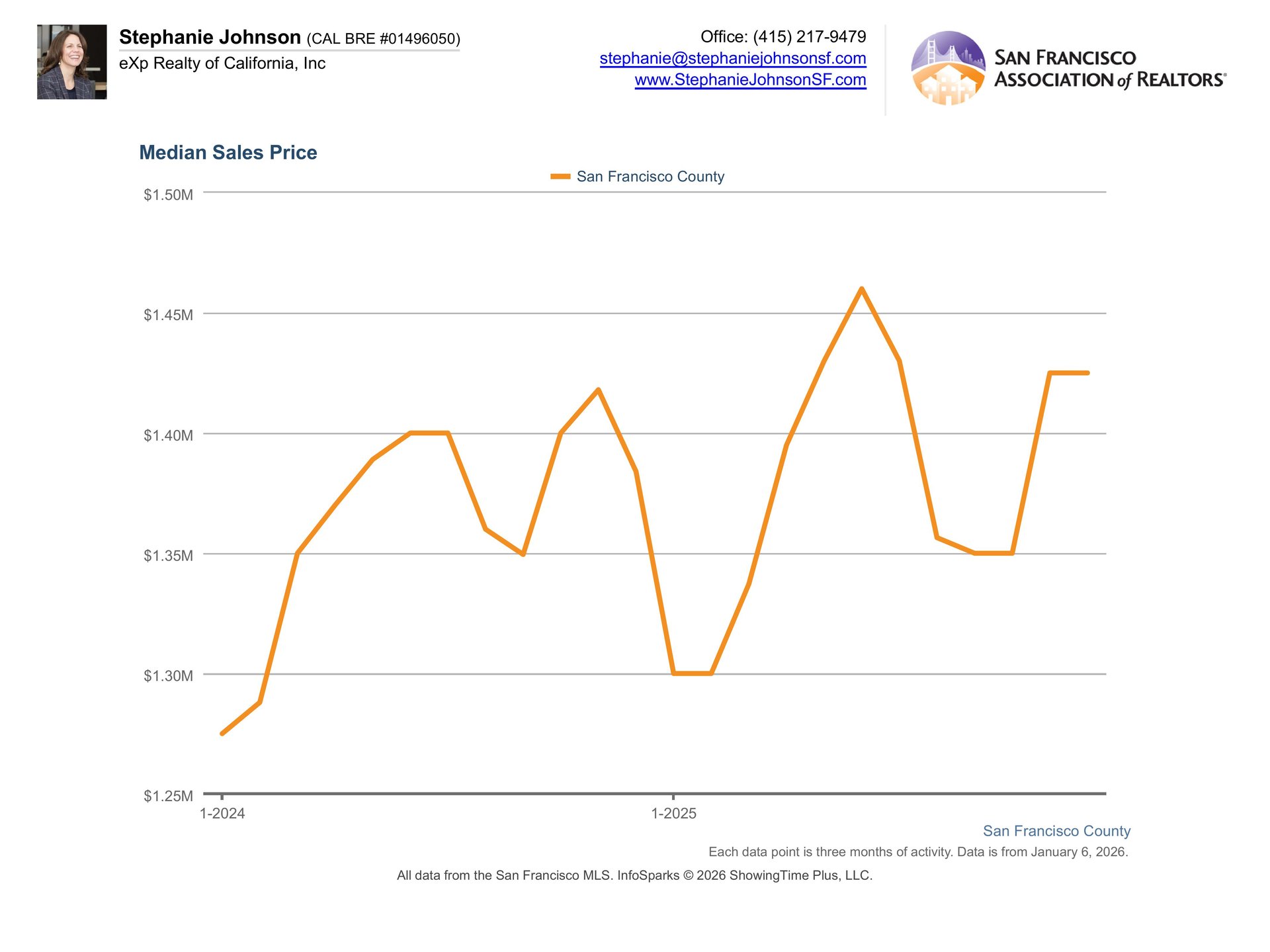
Pricing Trends
San Francisco home prices began 2025 at a median of $1,250,000 in January and climbed steadily through the spring. Momentum peaked in May at $1,500,000, reflecting strong buyer activity and limited competition for well-located, well-presented properties.
As the year progressed, the market adjusted. Increased inventory and buyer caution led to price pullbacks through the summer, with the median dipping back to $1,250,000 in August. Prices recovered again in early fall, reaching $1,465,000 in November, before settling at $1,358,000 in December.
While the year ended below the spring peak, pricing remained well-supported, underscoring the resilience of San Francisco’s market even amid shifting conditions.
San Francisco Median Price Trend - Residential 1-4 Units
Inventory: A Persistently Tight Market
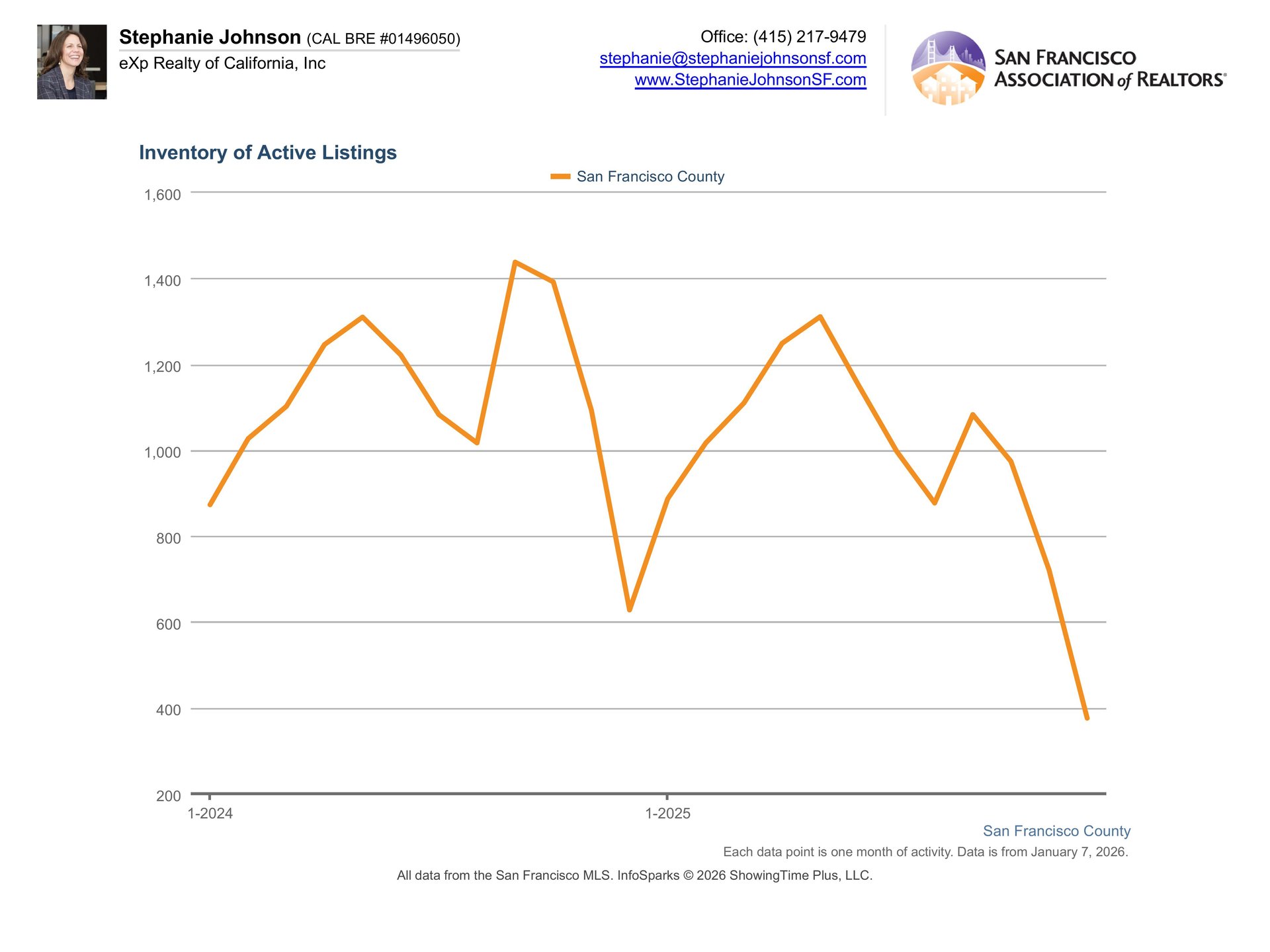
Inventory remained the defining factor throughout 2025.
-
The year began with 887 active listings in January
-
Inventory climbed through spring, peaking in May at 1,311 listings
-
From early summer forward, listings declined steadily
-
By December, inventory dropped to just 378 homes, the lowest level in more than 20 years
As prices softened mid-year, many sellers chose to wait rather than adjust expectations. At the same time, well-priced homes continued to sell, steadily absorbing available supply. By year-end, inventory constraints once again tilted leverage toward sellers—particularly in desirable neighborhoods and the single family home segment.
San Francisco Active Listings Trend - Residential 1-4 Units
Days on Market: A Slower, More Deliberate Pace
While inventory reached historic lows, the market itself slowed.
-
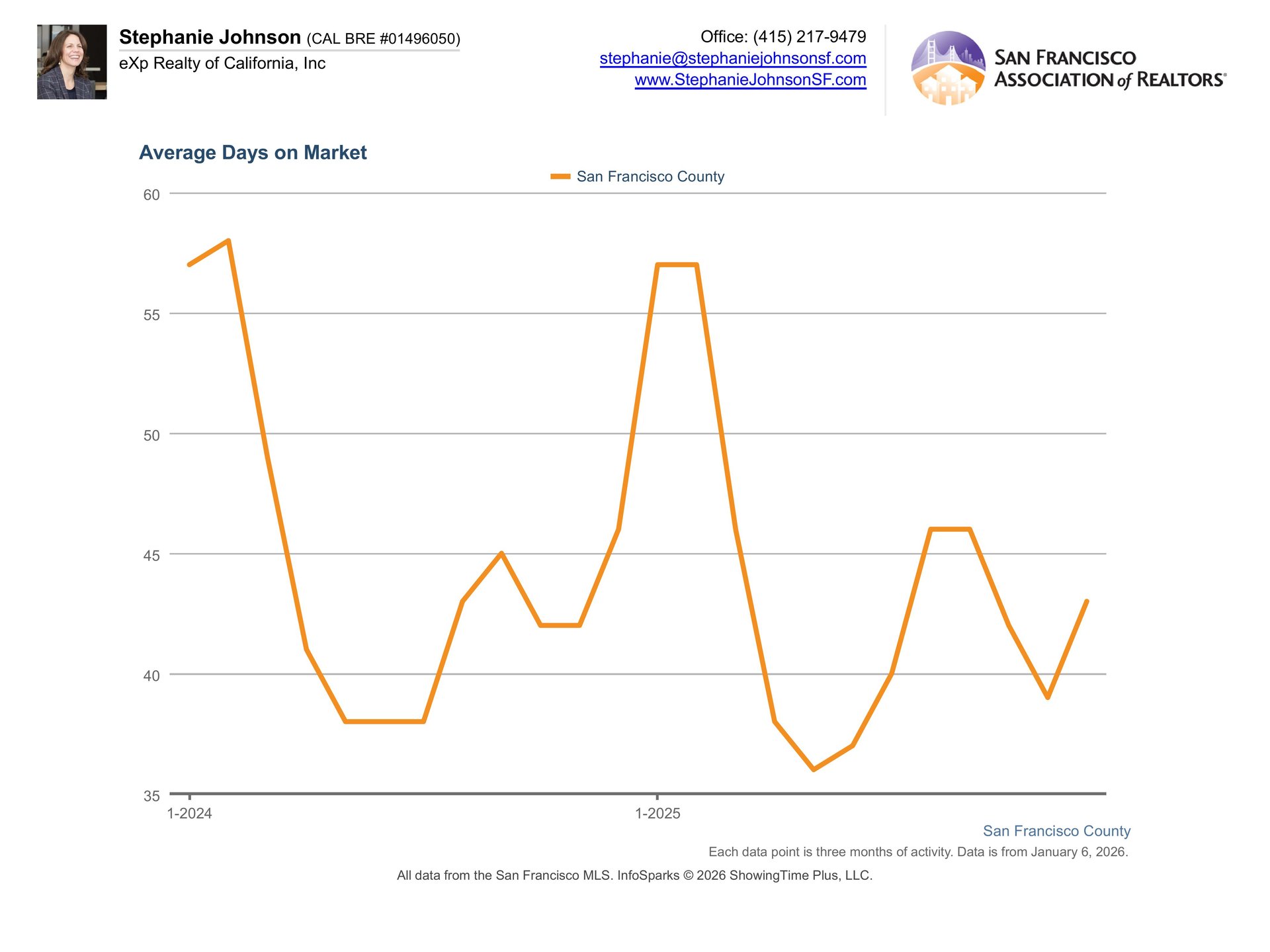
Days on market were lowest in the spring, dipping to 34 days
-
As the year progressed, homes took longer to sell
-
By December, average days on market reached 54 days
This longer selling timeline reflects a more cautious buyer pool—not a lack of demand. Sellers who stayed active and priced realistically generally achieved their goals, while others opted to step back and reassess. The result was a market defined by selectivity rather than urgency.
San Francisco Average Days on Market - Residential 1-4 Units
Comparing the Market: Single-Family Homes vs. Condominiums
During the fourth quarter of 2025—from October through December—inventory constraints continued to shape the San Francisco housing market, but performance varied notably between single-family homes and condominiums.
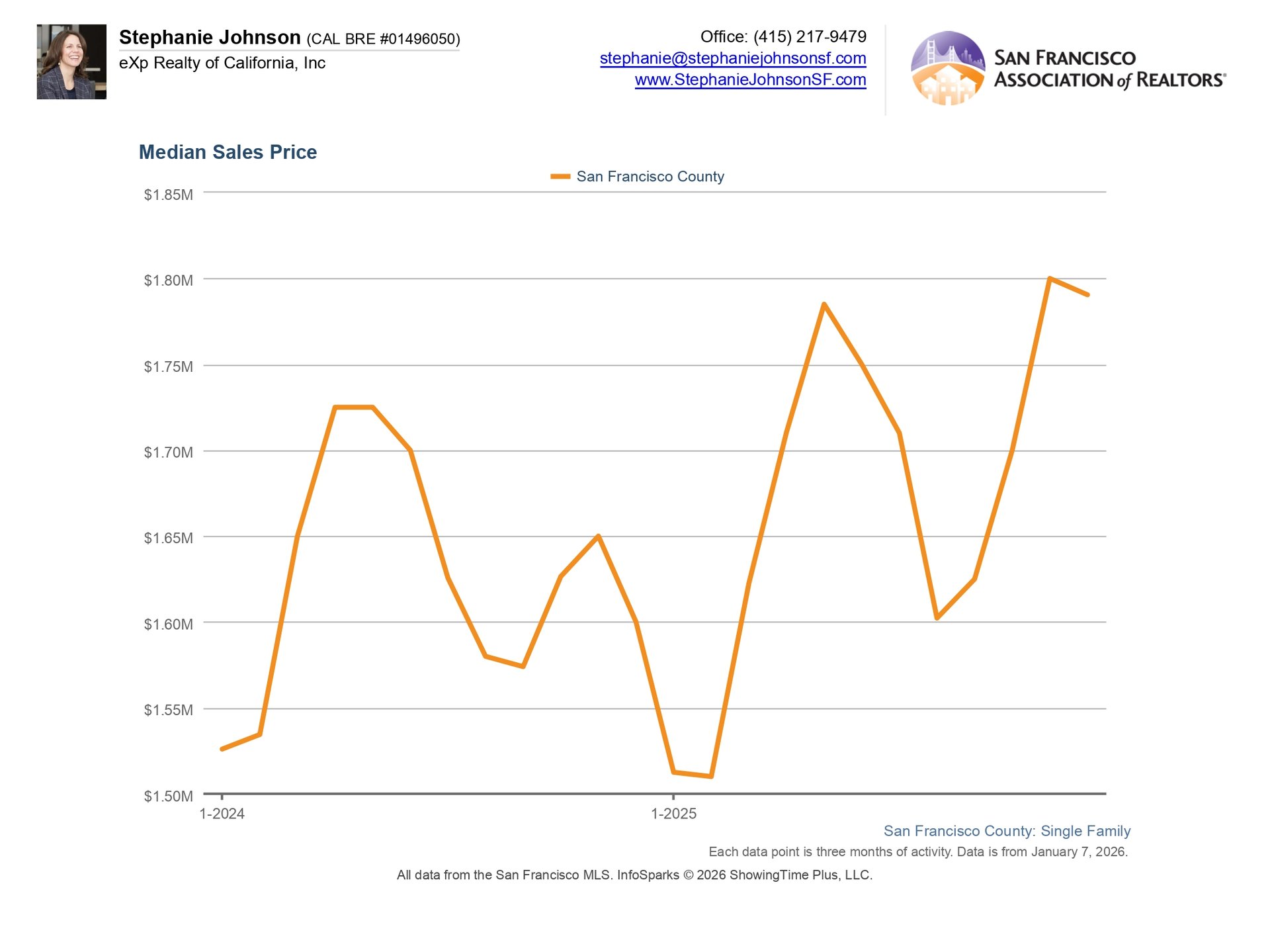
Single-family homes remained the most competitive segment throughout Q4. With a median price of $1,795,000 and an average of just 27 days on market, buyer demand consistently outpaced supply. Inventory in this category remained exceptionally tight at 0.9 months, reinforcing strong pricing power for sellers. Buyers targeting single-family homes faced limited options and needed to act decisively when the right property became available.
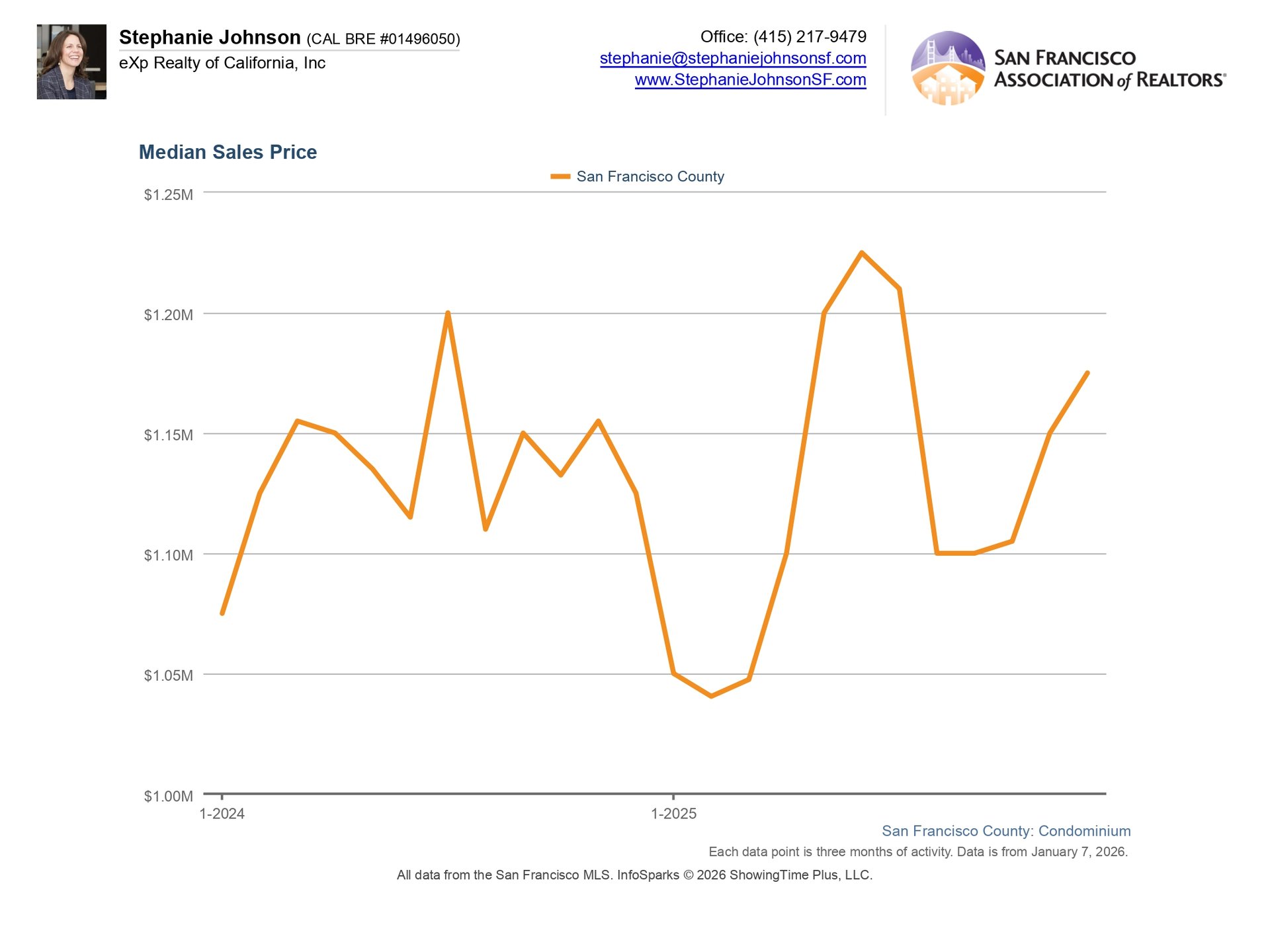
Condominiums, by contrast, experienced a more balanced—though still constrained—market during the same period. The median condominium price stood at $1,175,000, with homes averaging 56 days on market. Inventory levels were higher at 2.1 months of supply, giving buyers more choice and negotiating room compared to the single-family segment. While demand remained steady, condo pricing and absorption moved at a more measured pace in the fourth quarter.
This Q4 comparison highlights an important takeaway: San Francisco is not a one-size-fits-all market. Property type, location, and buyer profile continued to play a significant role in shaping outcomes as the year came to a close.
Median Price Trends for San Francisco - Single Family Homes
What This Means for You
For Sellers:
San Francisco continues to reward precision. Low inventory creates opportunity, but buyers are value-driven and informed. Homes that are thoughtfully prepared, strategically priced, and professionally marketed stand out—and sell. Overpricing, however, is met quickly with resistance.
For Buyers:
Opportunities still exist, especially during moments of pricing adjustment or seasonal slowdowns. Preparation and decisiveness matter. With inventory this limited, the right home can still attract competition, even in a market that feels more balanced than past cycles.
Looking Ahead to 2026
As we move into 2026, inventory will remain the central story. If supply stays constrained, pricing is likely to remain stable, with upside potential in high-demand segments. Expect buyers to remain selective and sellers to succeed most when they align pricing with current market realities rather than past peaks.
If you'd like to discuss how these trends apply to your specific real estate goals, book a call with me. I'm always here to help.
Email: [email protected]
Phone: (415) 217-9479
Copyright © 2025 Stephanie Johnson. All rights reserved.