
By Stephanie Johnson, Your Sonoma County Real Estate Authority
Published January 7, 2026
January is typically a slower, transitional month in San Francisco real estate. This year’s data reflects familiar seasonal patterns, but with a clear divide between single-family homes and condominiums. While pricing remains supported in both segments, supply dynamics and buyer behavior differ significantly.
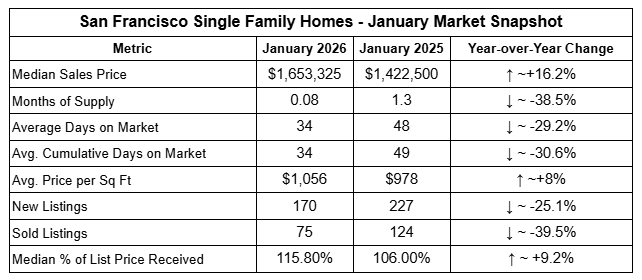
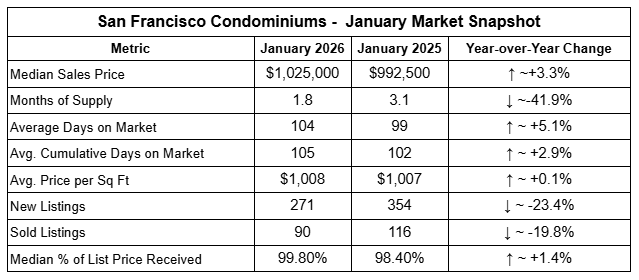
Below is a clean year-over-year comparison:
The Big Picture: A Split Market
The January data highlights a structurally bifurcated market.
Single-family homes remain extremely supply-constrained, even by San Francisco standards. Inventory declined meaningfully year-over-year, while pricing and price-per-square-foot increased. Despite fewer transactions, demand remains strong enough to drive shorter days on market and aggressive pricing, as reflected in the elevated median percent of list price received.
Condominiums, by contrast, continue to move at a slower pace. Higher inventory levels relative to single-family homes give buyers more leverage, resulting in longer timelines and more selective demand — a pattern consistent with historical January trends.
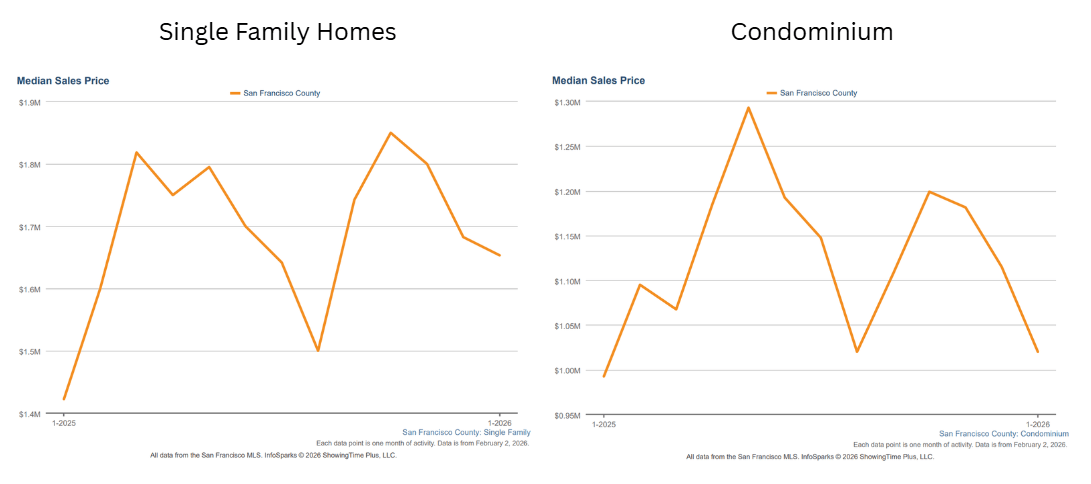
San Francisco Median Price Trends
Inventory: The Defining Variable
Inventory remains the primary driver of market behavior.
-
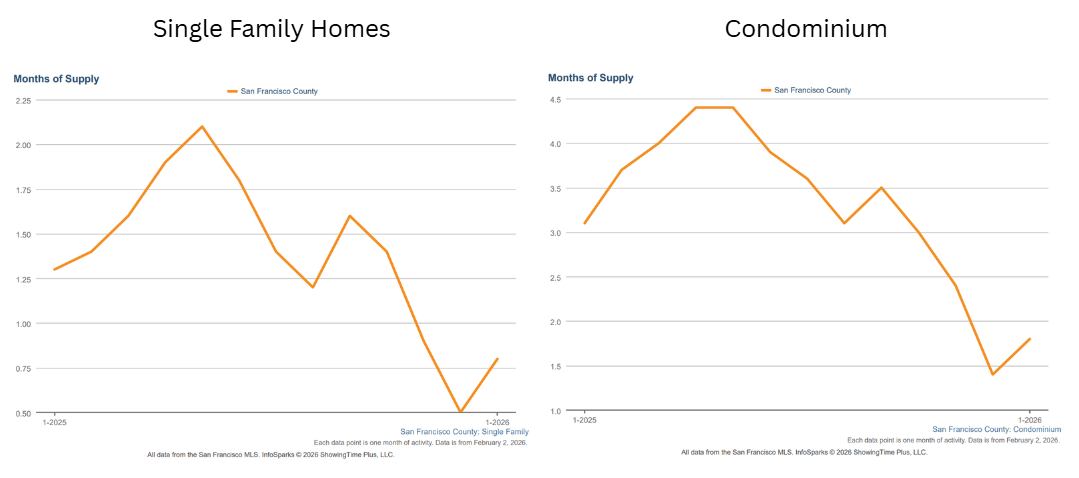
Single family homes at 0.8 months of supply indicate an exceptionally tight market
-
New listings declined sharply, limiting buyer options
-
Condominium supply at 1.8 months offers comparatively more flexibility
January typically provides some seasonal breathing room on supply, but single-family inventory remains constrained even by winter norms.
San Francisco Months of Supply Trends
Days on Market: Seasonal, but Telling
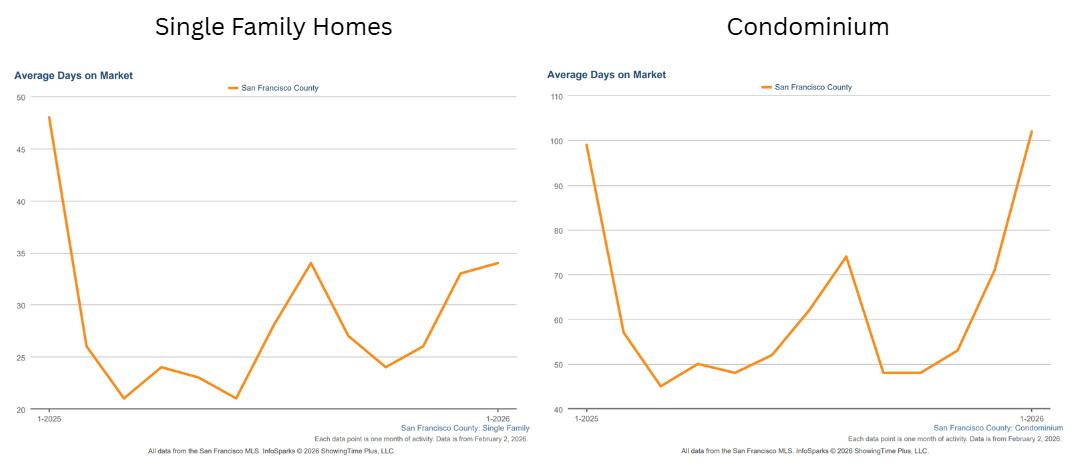
Selling timelines reflect normal winter behavior — with stark differences by property type.
-
Single-family homes averaged 34 days on market, a fast pace for January
-
Condominiums averaged over 100 days, reflecting buyer caution and price sensitivity
This pattern suggests buyers are still active, but highly selective — especially in segments with more inventory.
San Francisco Average Days on Market Trends
How January Compares to Historical January Trends
From a long-term perspective, January 2026 aligns with familiar seasonal behavior:
-
Activity slows
-
Days on market rises
-
Pricing stabilizes rather than accelerates
What stands out is how tight the single-family segment remains, reinforcing a trend that has persisted for years. Condominium performance continues to normalize more slowly, following a different recovery curve.
Seller Takeaways
Single Family Home Sellers
-
Inventory remains extremely limited
-
Buyer competition is still present
-
Well-prepared homes continue to command strong pricing
Condominium Sellers
-
Buyers are cautious and negotiating
-
Pricing accuracy matters more than timing
-
Presentation and positioning are critical
Buyer Takeaways
Single Family Home Buyers
-
Inventory remains scarce
-
Competition can be intense
-
Decisive, clean offers are often required
Condominium Buyers
-
More options and flexibility
-
Longer days on market create negotiating opportunities
-
January remains one of the more patient entry points
Looking Ahead
January establishes the starting position for the year.
San Francisco enters 2026 with persistent supply constraints in single family homes and a more deliberate condominium market. As we move into spring, inventory, or lack thereof, will be a key driver in market outcomes, especially in the single family market.
If you'd like to discuss how these trends apply to your specific real estate goals, book a call with me. I'm always here to help.
Email: [email protected]
Phone: (415) 217-9479
Copyright © 2026 Stephanie Johnson. All rights reserved.