By Stephanie Johnson
Published April 2026
The first quarter of 2026 provides a comprehensive look at how the San Francisco real estate market is evolving as we move into the spring season.
Unlike the typical early-year transition, Q1 2026 shows a market with incredible momentum — with rising prices, tightening inventory, and strong buyer demand across both San Francisco single family homes and San Francisco condominiums.
The data continues to highlight a split between these two segments, but both are trending far stronger than they were one year ago.
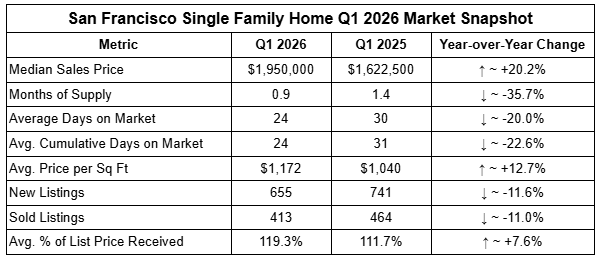
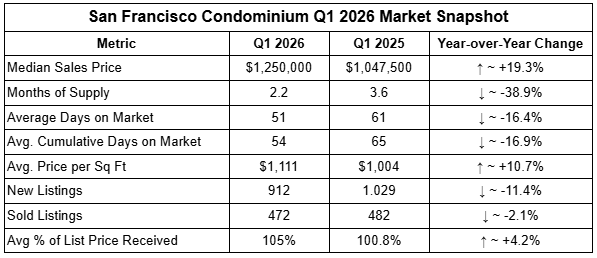
Below is a year-over-year snapshot of the San Francisco housing market to frame the quarter.
The Big Picture: Strengthening Prices, Tightening Supply
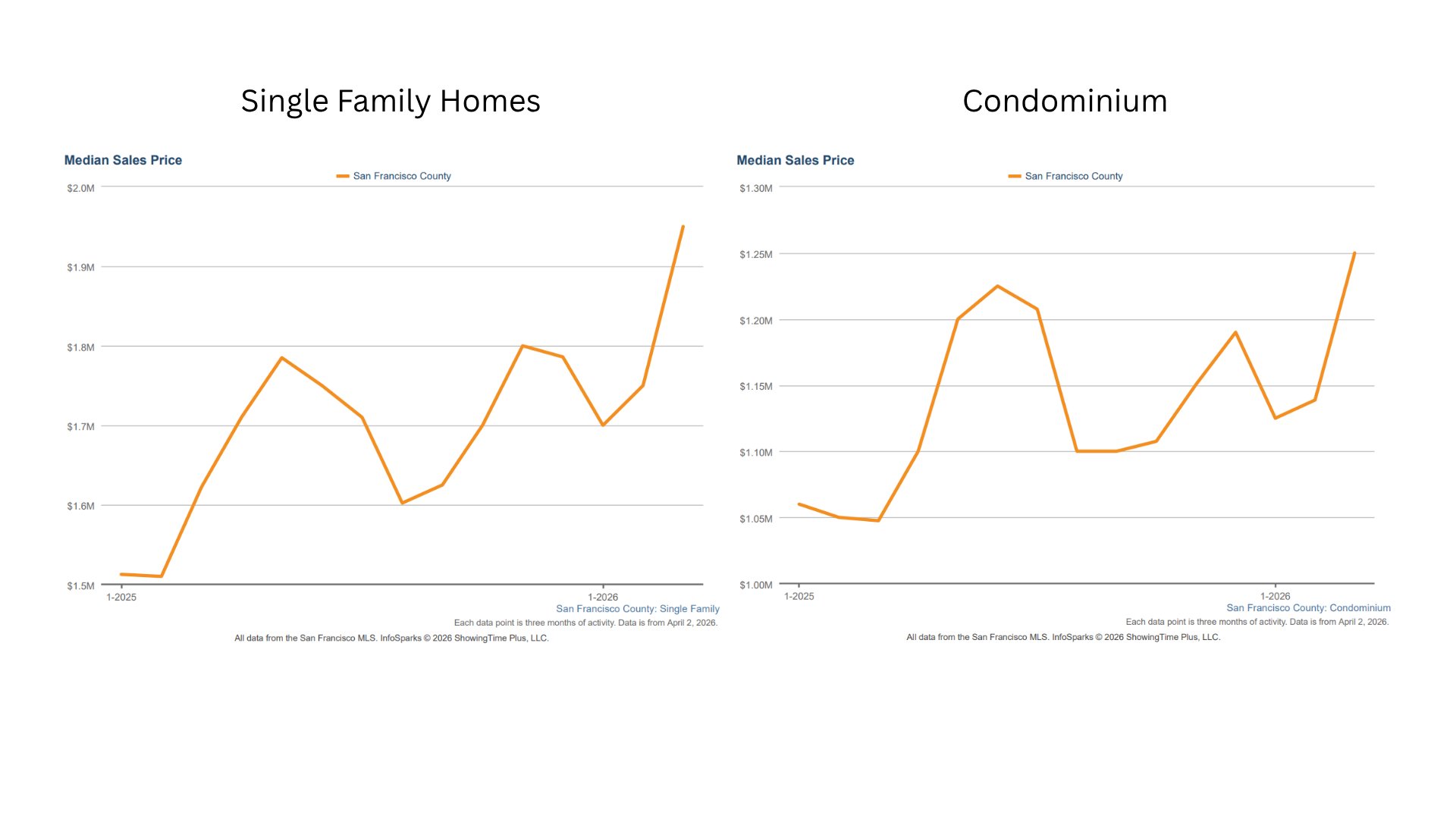
The San Francisco housing market in Q1 2026 shows clear upward pressure on pricing, particularly in the single-family home segment.
The median home price in San Francisco for single family homes reached $1,950,000, up 20.2% year-over-year. At the same time, condo prices in San Francisco rose to $1,250,000 — a 19.3% increase compared to last year.
These gains are being driven primarily by declining housing inventory in San Francisco.
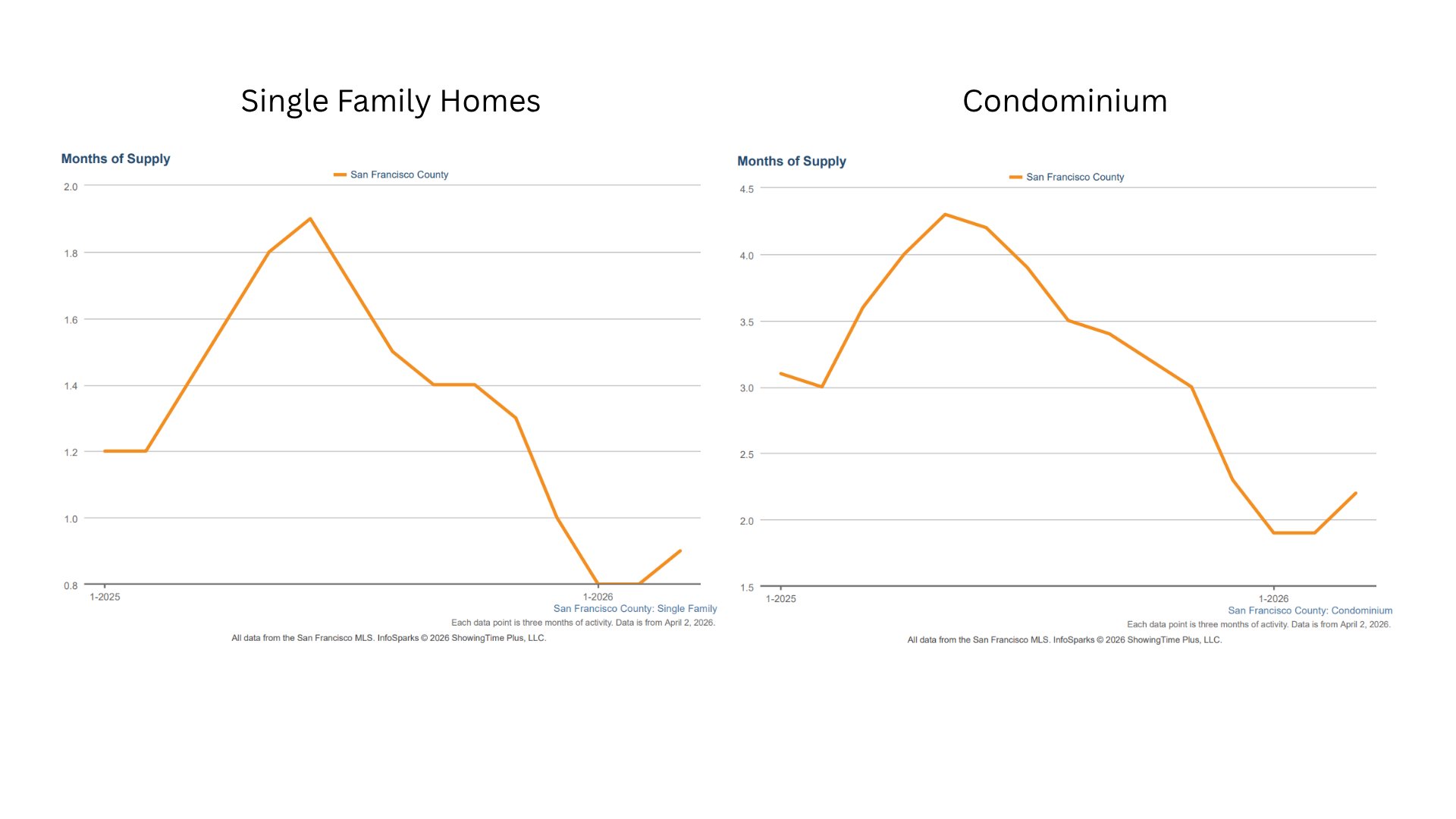
Months of supply dropped to just 0.9 months for single family homes and 2.2 months for condominiums — both significant declines from Q1 2025.
This level of inventory signals a serious seller’s market in San Francisco, particularly in the single family home segment where supply remains extremely limited.
At the same time, sellers are achieving strong outcomes, with single family homes averaging 115.9% of list price — a clear indicator of continued competition.
Inventory & Buyer Resources: The Driving Forces Behind Market Conditions
San Francisco’s low housing inventory coupled with a very wealthy and cash rich buyer pool, continues to be the dynamic shaping San Francisco’s housing market.
First, new listings in San Francisco declined across both segments:
-
Single family homes dropped from 741 to 655 (-11.6%)
-
Condominiums decreased from 1,029 to 912 (-11.4%)
Despite fewer listings, the number of homes sold in San Francisco remained relatively stable, signaling consistent buyer demand.
This imbalance between supply and demand is creating:
● Increased competition, especially for single family homes in San Francisco
● Reduced selection for buyers
● Continued upward pressure on San Francisco home prices
Adding to the pressure on prices is the influx of wealth in San Francisco, mainly coming from the tech sector and AI companies in particular. Starting salaries at companies like Open AI and Anthropic are aggressively high due to competition for talent in the field. The result is a buyer pool with incredible resources that competes for a dwindling number of homes available for purchase. Unless listing activity increases meaningfully, these conditions are likely to persist through the spring and summer market.
Days on Market: Faster Pace Signals Strong Demand
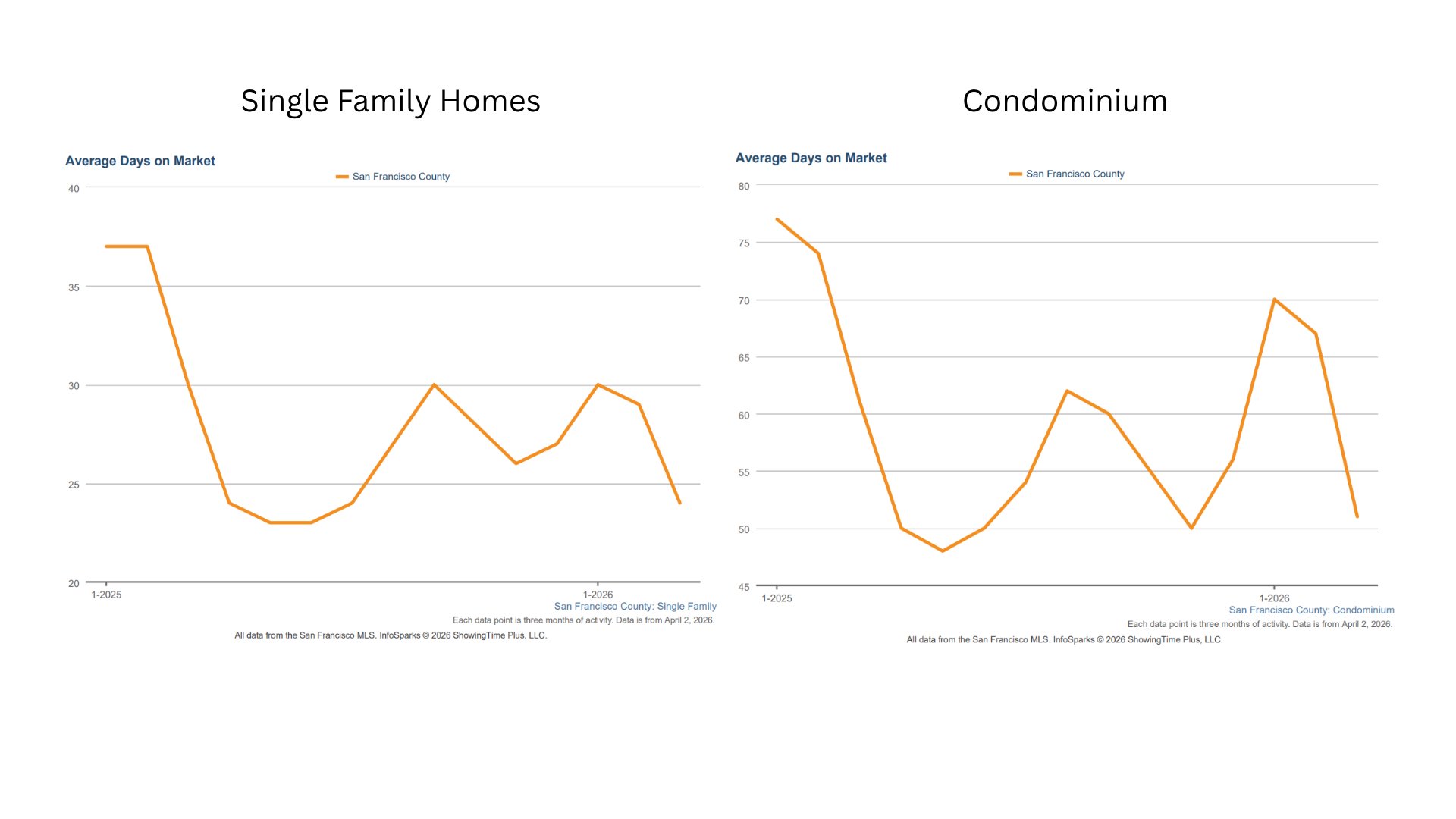
Market speed has improved notably compared to last year, reinforcing strong San Francisco housing market trends.
Average days on market in San Francisco decreased across both property types:
-
Single family homes: 24 days (down from 30)
-
Condominiums: 51 days (down from 61)
This faster pace reflects a market where well-priced homes that are properly prepared for market are in high demand and in many cases, buyers are willing to compete for their purchases.
Price Per Square Foot: Continued Upward Momentum
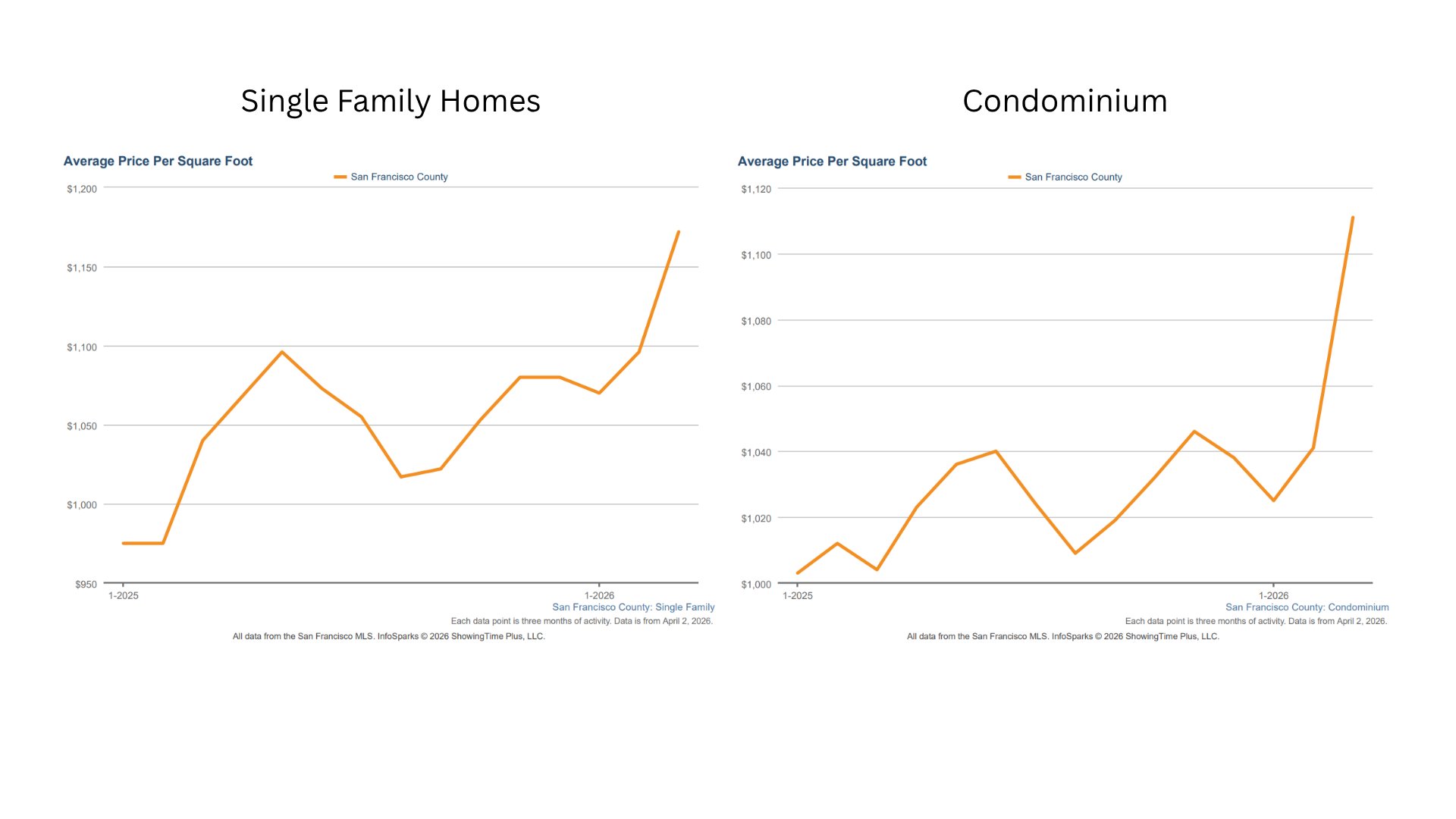
The average price per square foot in San Francisco increased in both segments:
-
Single family homes rose to $1,172 (+12.7%)
-
Condominiums increased to $1,111 (+10.7%)
This metric reinforces the strength of the San Francisco real estate market, as price per square foot often provides a clearer picture of underlying value trends.
The consistency of these gains suggests that demand remains strong despite broader market shifts.
How This Quarter Compares to Seasonal Trends
The first quarter typically marks the beginning of increased activity in the San Francisco housing market.
What aligns with seasonal norms:
● Rising buyer activity
● Strengthening prices
● Faster sales pace
What stands out in 2026:
● Already constrained housing supply in San Francisco
● Very strong price growth early in the year
● Highly competitive conditions for single family homes
Rather than gradually tightening, the market is entering spring already in a competitive position.
Seller Takeaways
San Francisco home sellers are in a strong position heading into spring:
● Inventory remains limited
● Buyers are competing, especially for single family homes
● Many properties are selling above asking price
Sellers who price strategically and prepare their homes effectively are well-positioned to capitalize on current seller’s market conditions in San Francisco.
Buyer Takeaways
For San Francisco home buyers, the market presents both challenges and opportunities:
● Competition remains strong, particularly in the single family segment
● Condominiums offer slightly more flexibility
● Faster decision-making is often required
While opportunities still exist, buyers should be prepared for limited inventory and increasing competition in the San Francisco real estate market.
Looking Ahead
San Francisco real estate market trends in 2026 point to continued strength as we move deeper into the spring season.
With rising prices, declining inventory, and strong demand, the market is likely to remain competitive — especially if new listings do not increase significantly.
Inventory will continue to be the defining factor shaping the direction of the San Francisco housing market in the months ahead.
For more insight into the San Francisco real estate market, or to discuss your specific goals, feel free to reach out or book a call — I’m here to help.